How to read these reports
A Certificate of Analysis is batch-specific: it documents one lot of material, not a product line in general. Two figures matter most.
- Purity (%) — the proportion of the sample that is the target peptide, measured by reversed-phase HPLC. The remainder is typically synthesis-related impurities, residual solvent, or counter-ion.
- Assay (mg) — the mass of target peptide the laboratory actually measured, compared against the vial's label weight. At or slightly above label indicates a vial filled to specification.
Identity is confirmed separately by mass spectrometry, which checks the measured molecular weight against the expected value for the compound. Purity without identity confirmation is incomplete — a sample can be 99% pure and still be the wrong molecule.
Blends and cofactors are reported differently. Where a vial contains two peptides, the laboratory quantifies each component separately, and a single combined purity figure isn't meaningful — those reports show assay masses only, and we've marked them Assay only rather than invent a percentage.
About redaction
Five of the reports below publish their full Janoshik task number and verification key, so you can confirm them against the laboratory's records yourself — those are marked Key published. On the remaining reports, our supplier redacted the task number and key before releasing the copy to us, along with the client and manufacturer fields; those are marked ID redacted. The analytical results on a redacted report are unchanged, but you cannot independently verify it from the image alone, and we'd rather say so than imply a level of proof that isn't there. If you want the unredacted certificate for a lot you're ordering, request it and we'll obtain it from the supplier.
Reports span lots tested between November 2025 and March 2026. Certificates are batch-specific — the lot you receive may differ from the one shown, and we'll send its certificate on request. All materials are supplied For Research Use Only.
Published reports
Twenty-two reports, listed alphabetically by compound. Where a compound appears twice, those are two separate lots — useful for judging lot-to-lot consistency. For any catalog number not shown, email support@txlabs.bio and we'll send the report for the lot you'd actually receive.
BPC-157
99.789%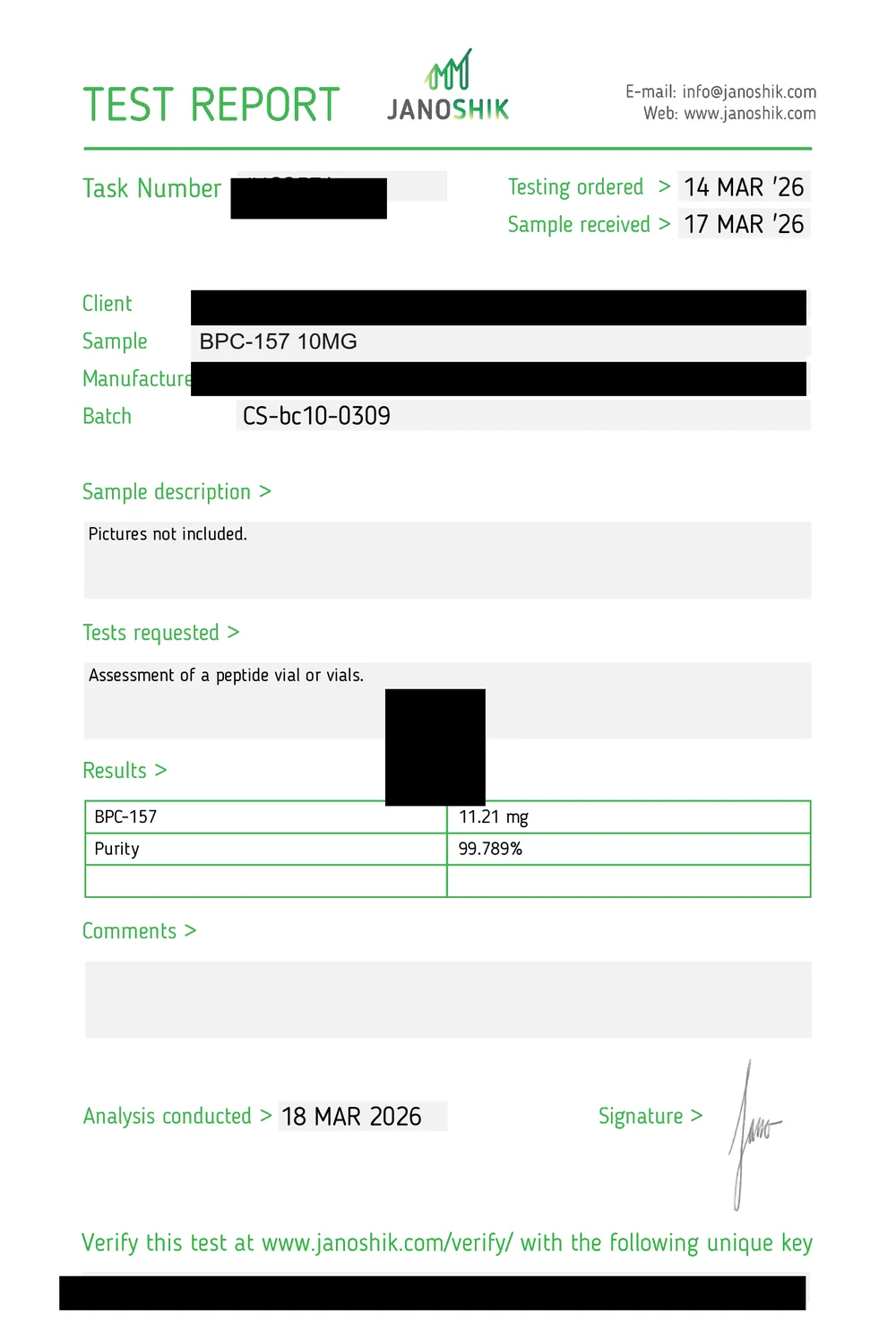
BPC-157 + TB-500
Assay only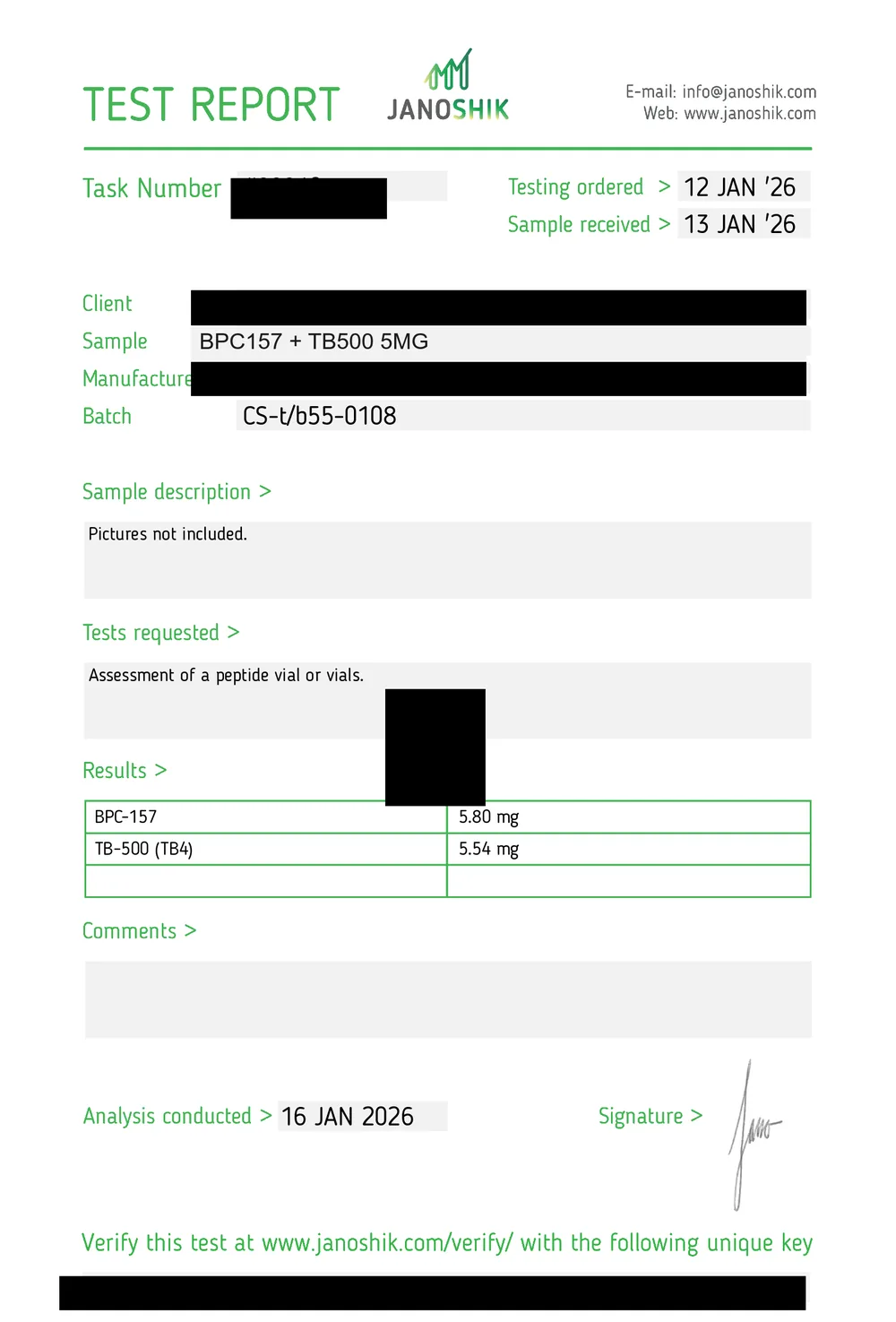
CJC-1295 No DAC + Ipamorelin
Assay only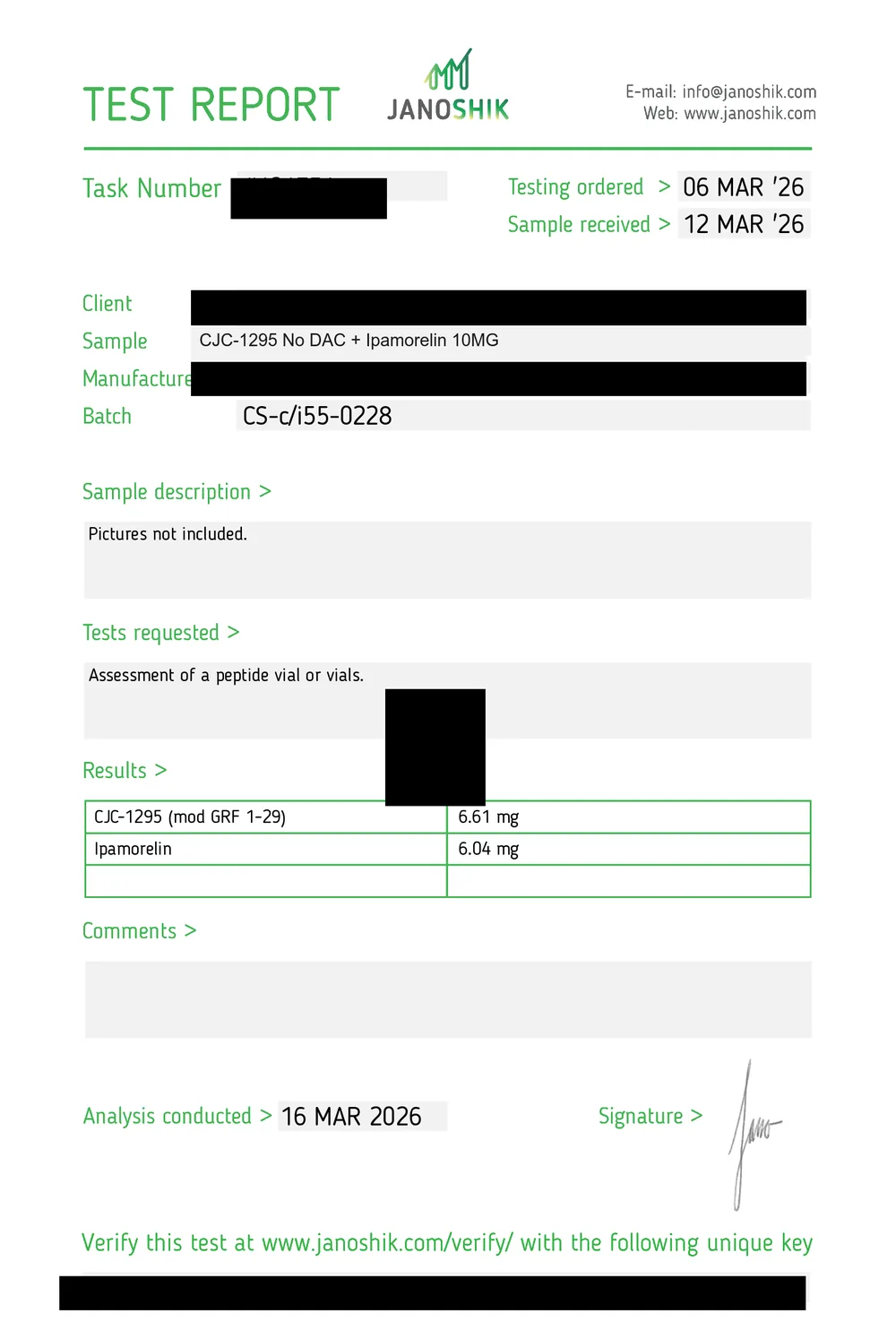
DSIP
99.405%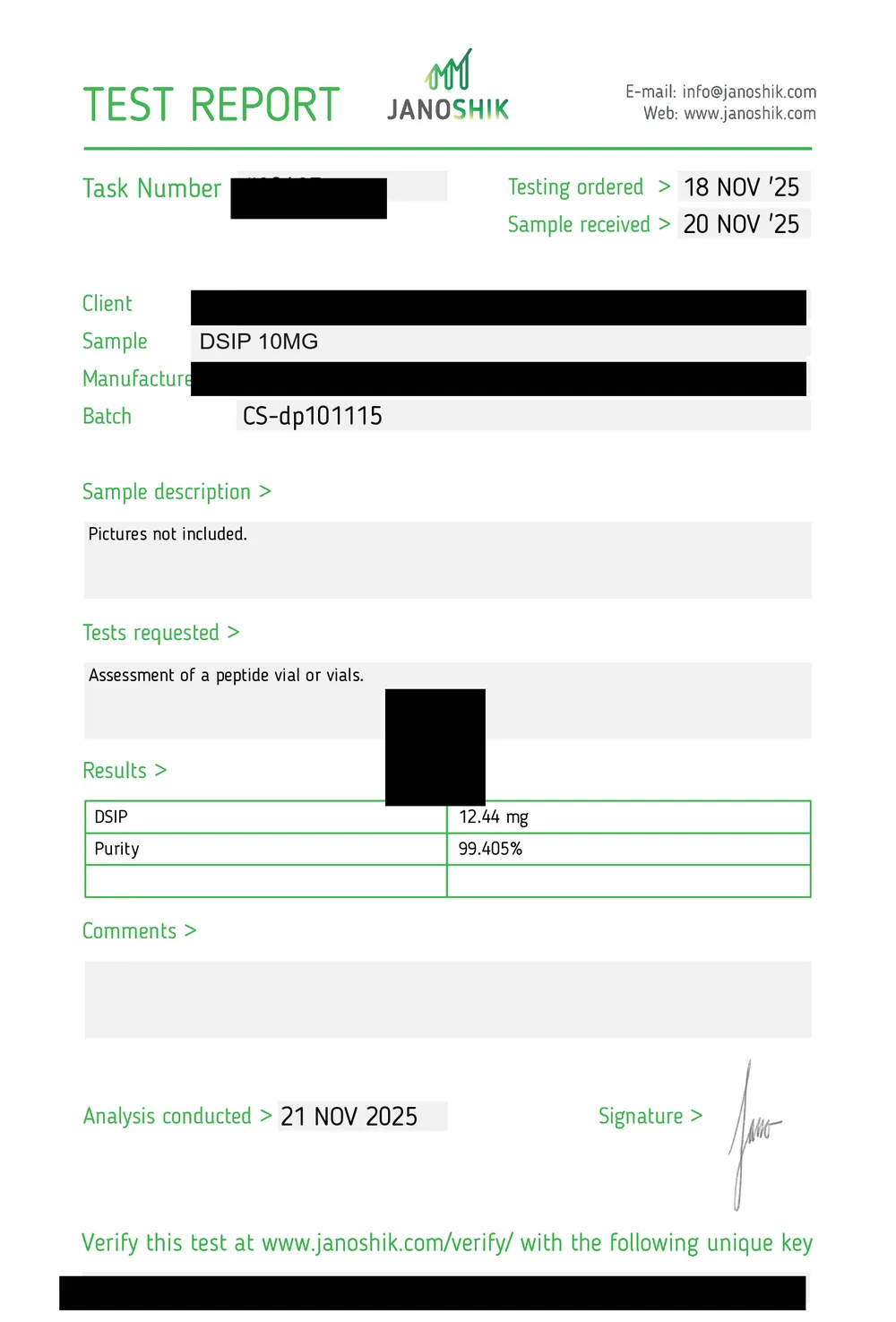
Epithalon
99.770%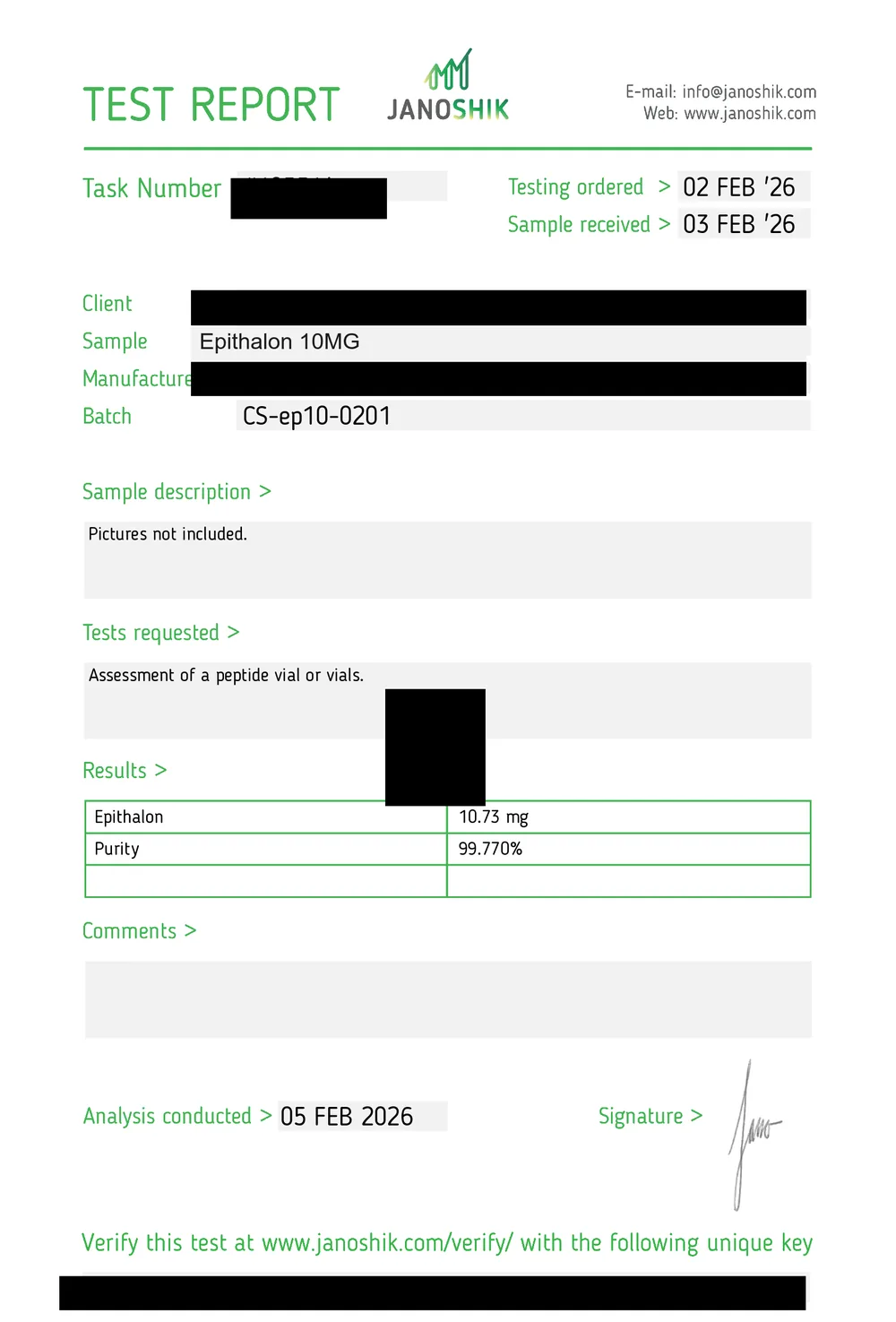
GHK-Cu
99.780%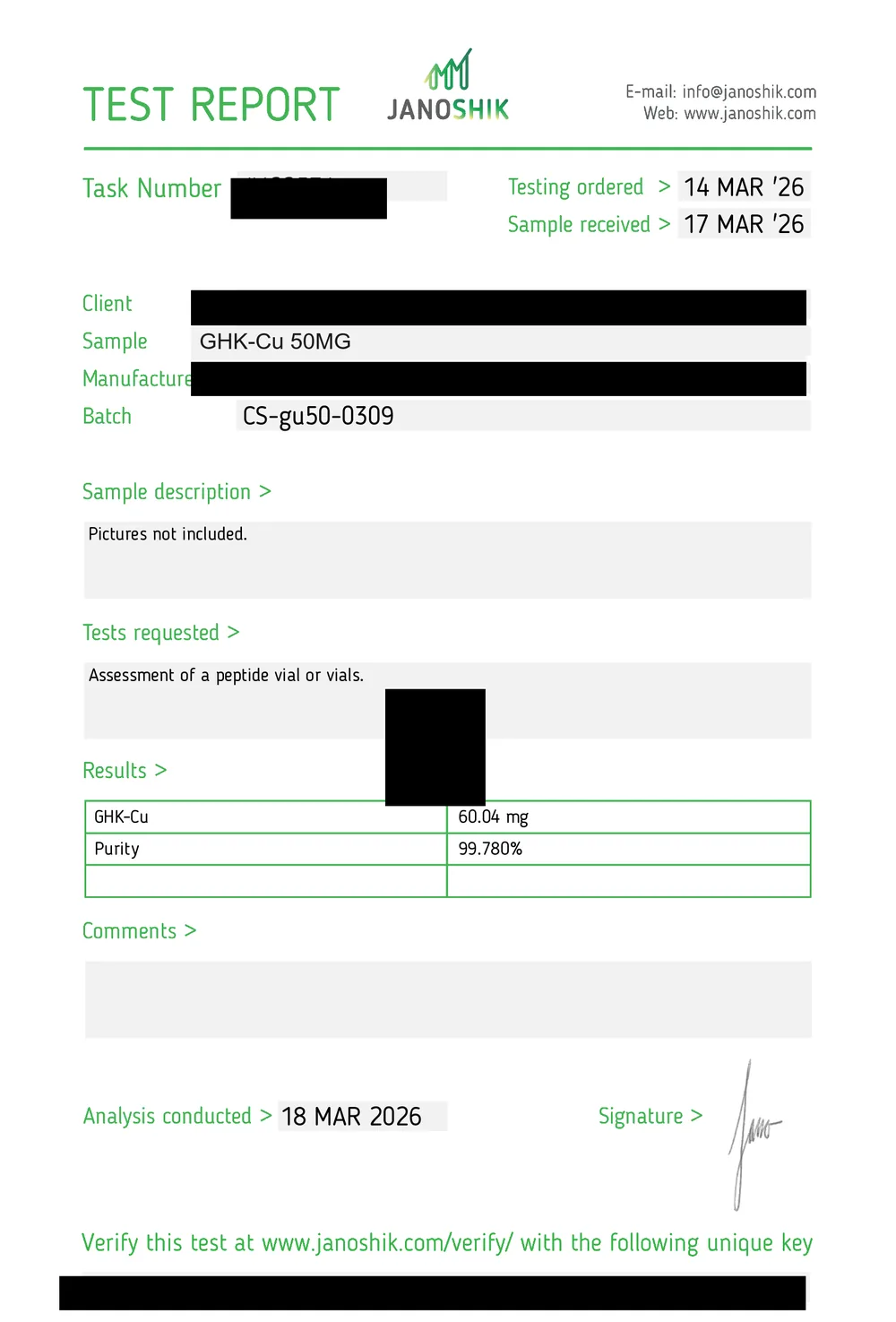
Ipamorelin
99.940%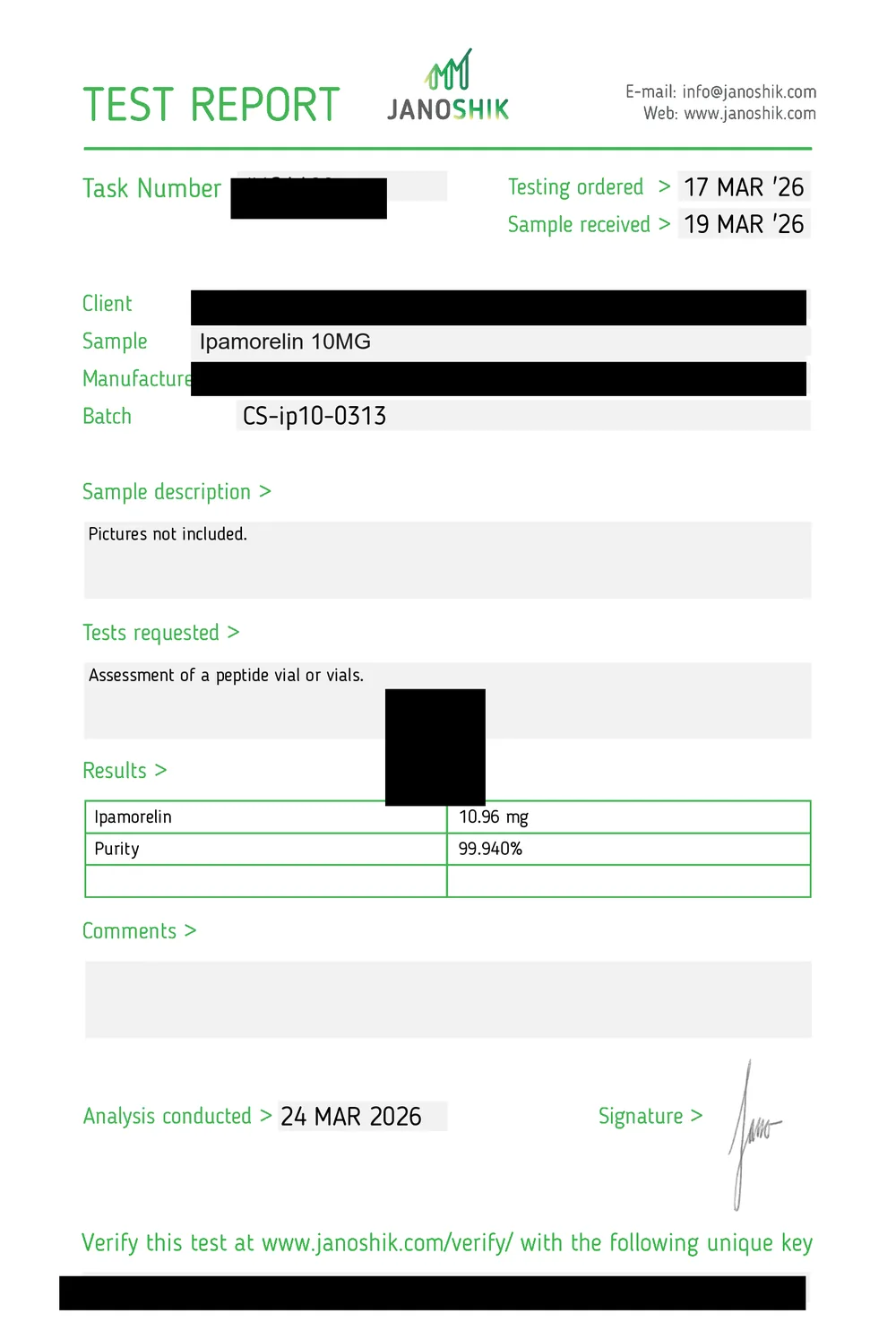
Ipamorelin
99.765%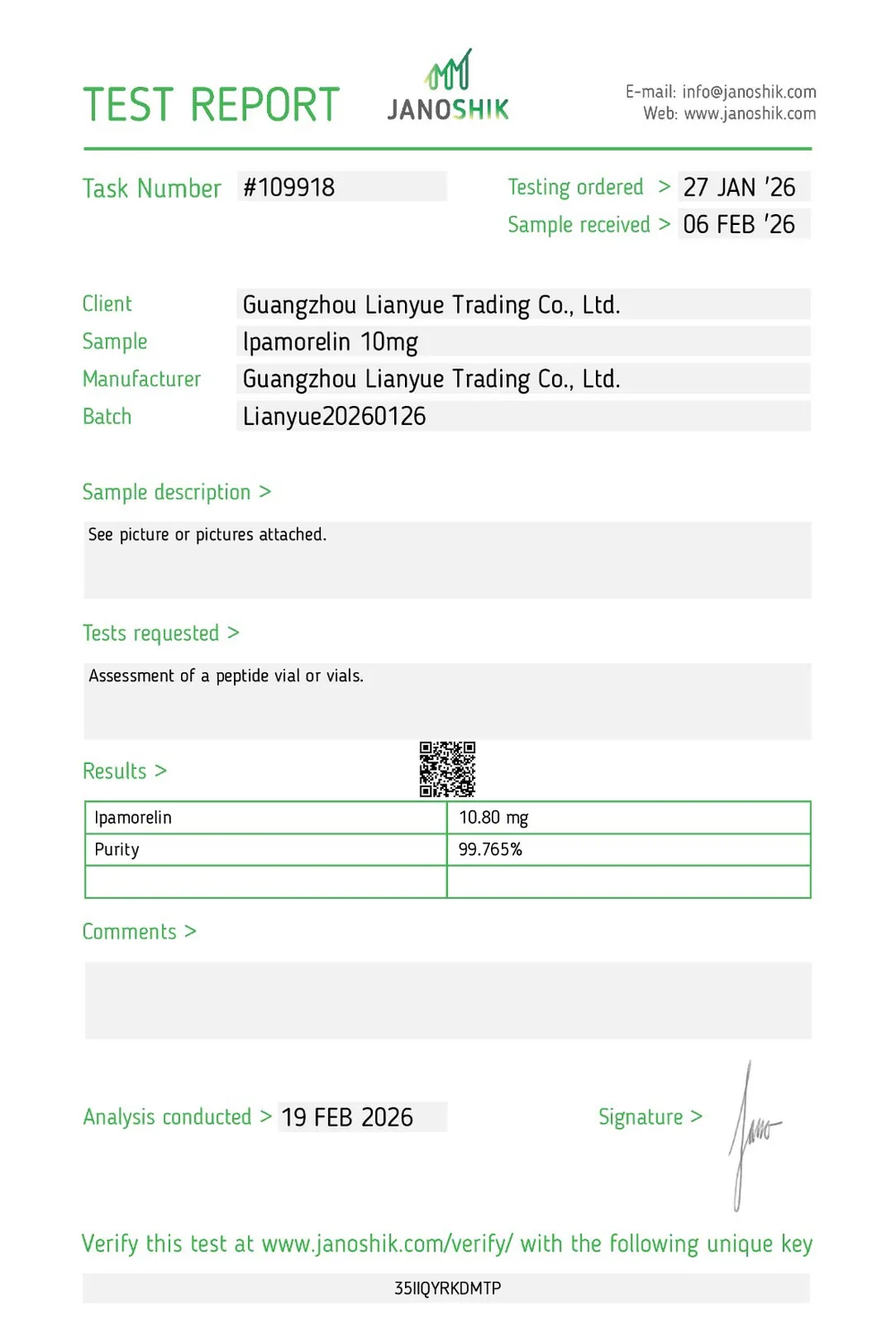
KPV
99.672%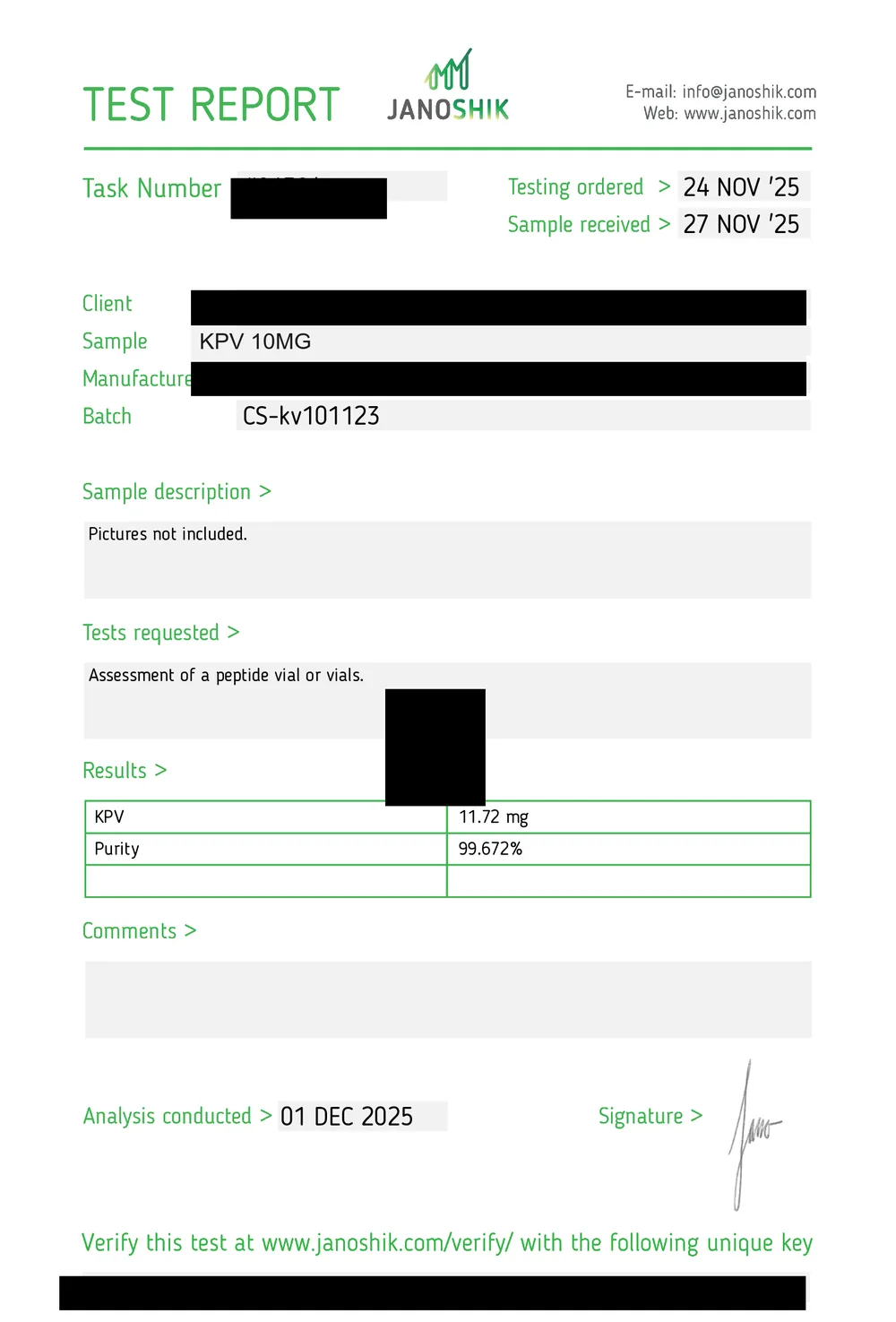
Melanotan II
99.513%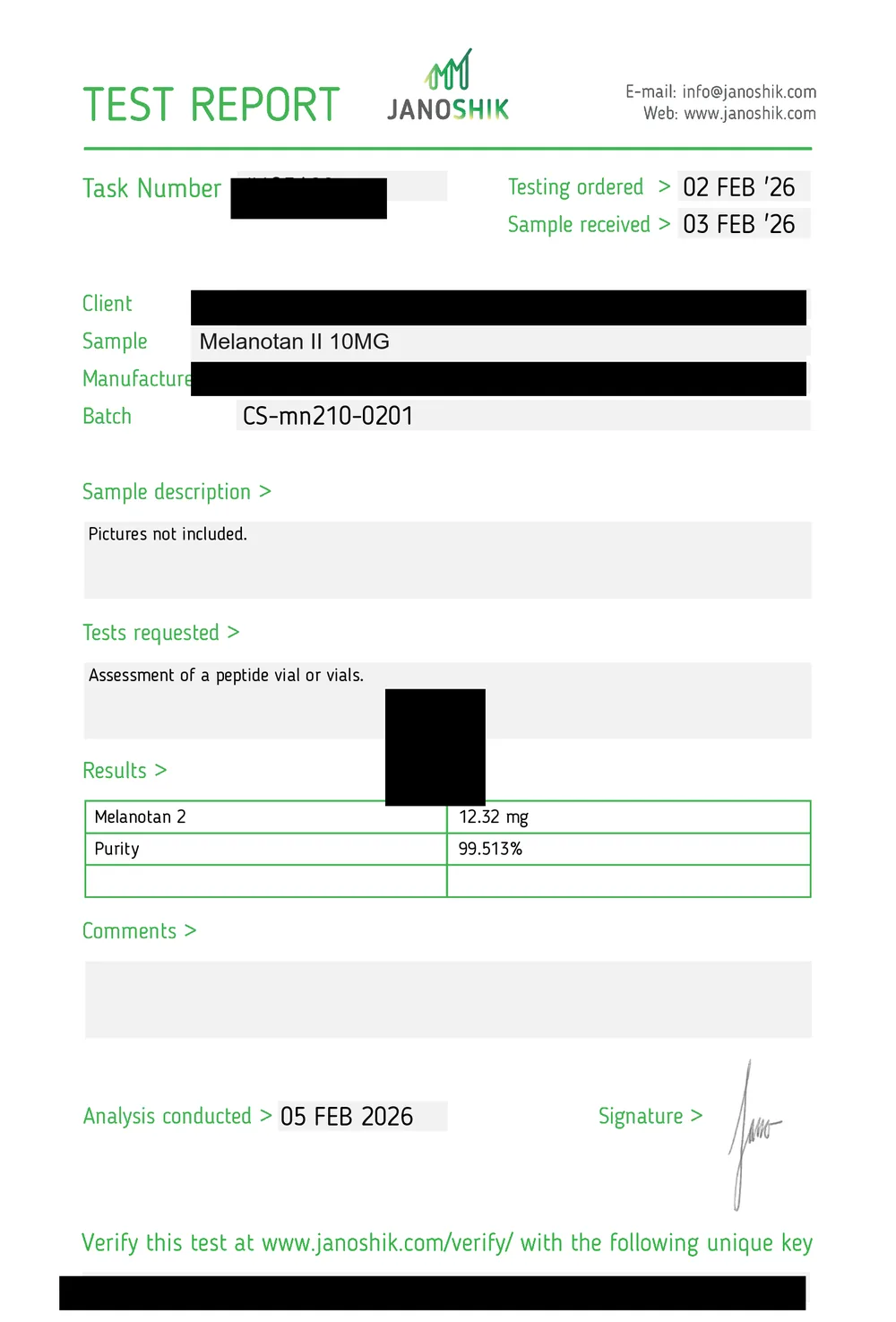
MOTS-c
99.443%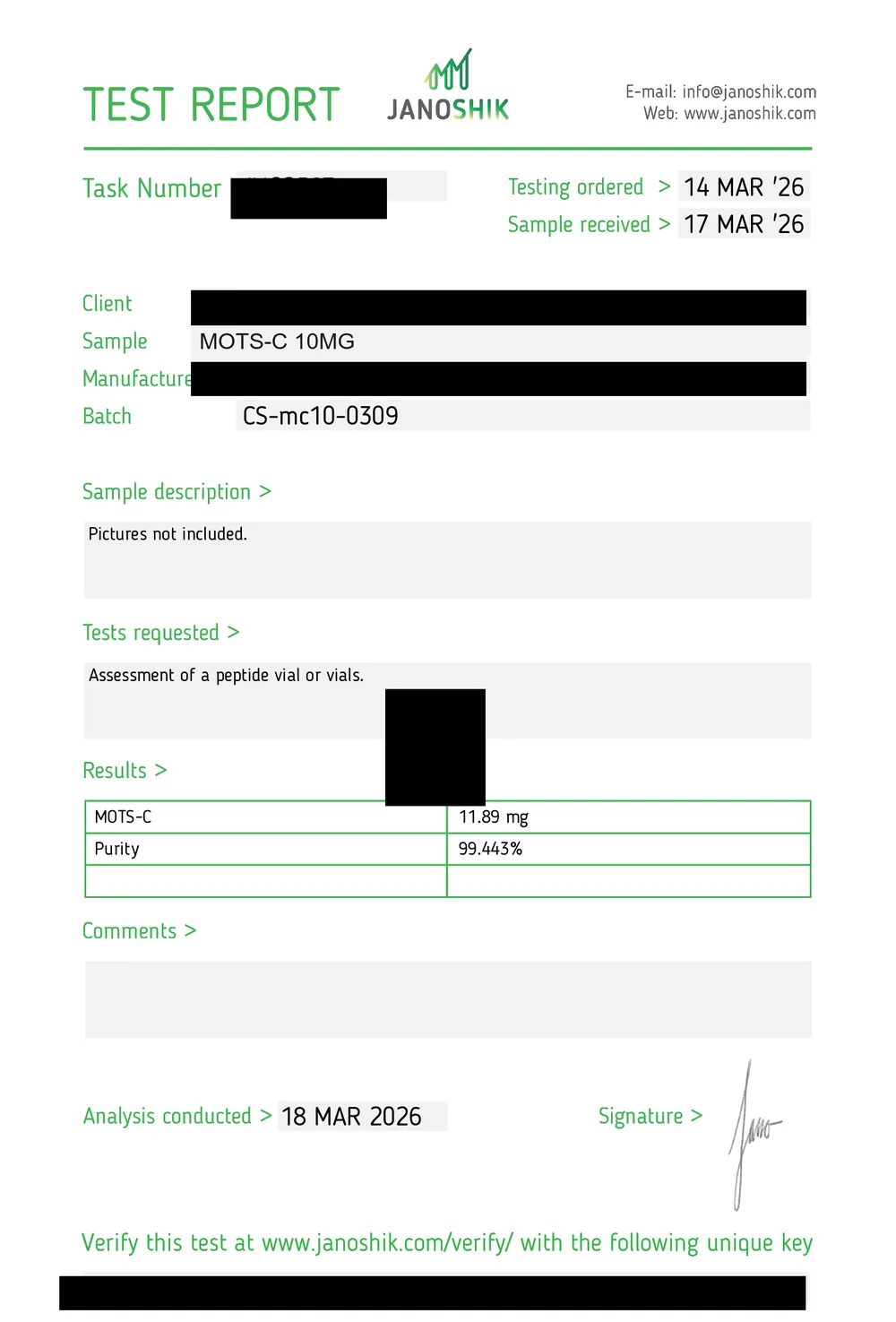
MOTS-c
99.511%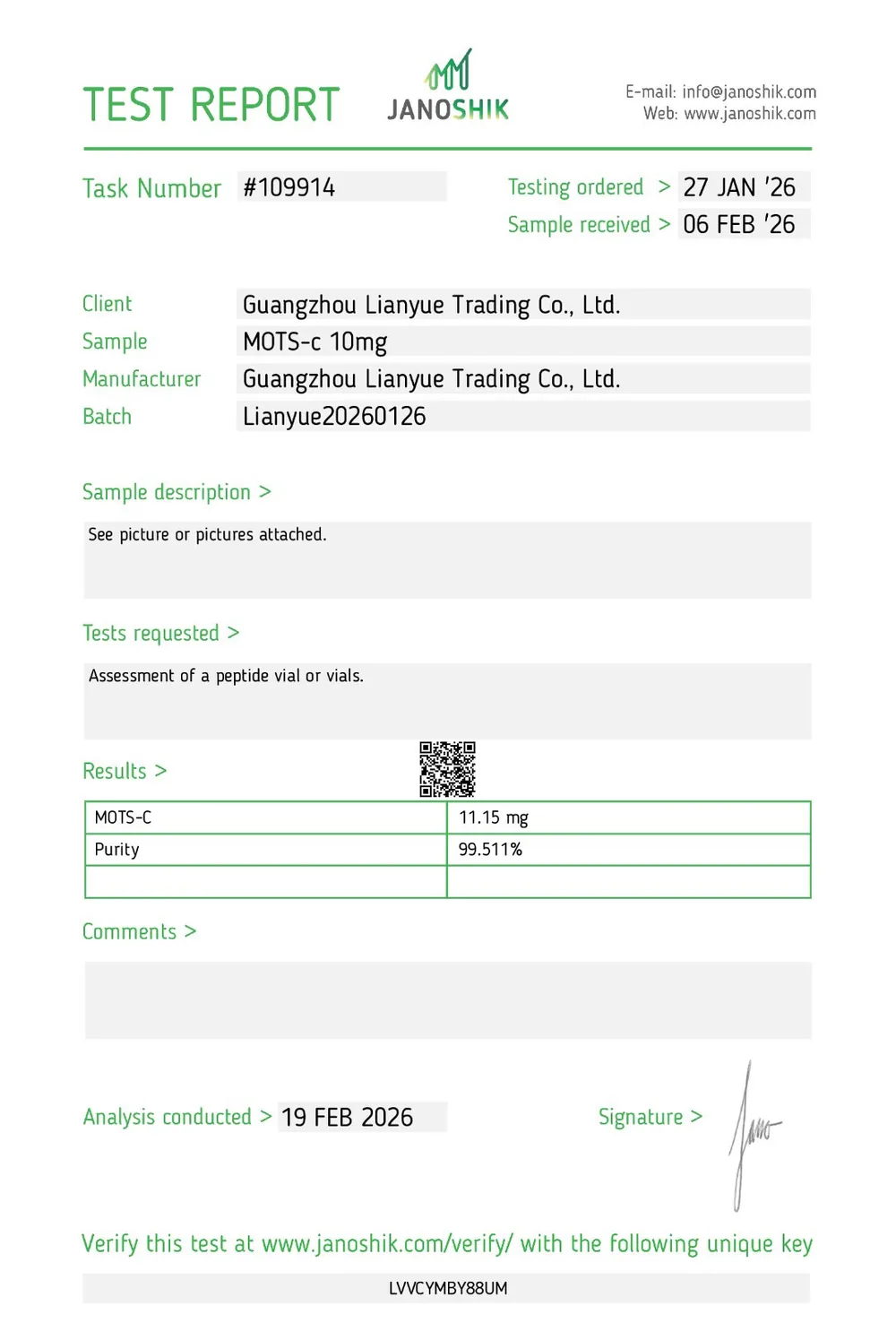
NAD+
Assay only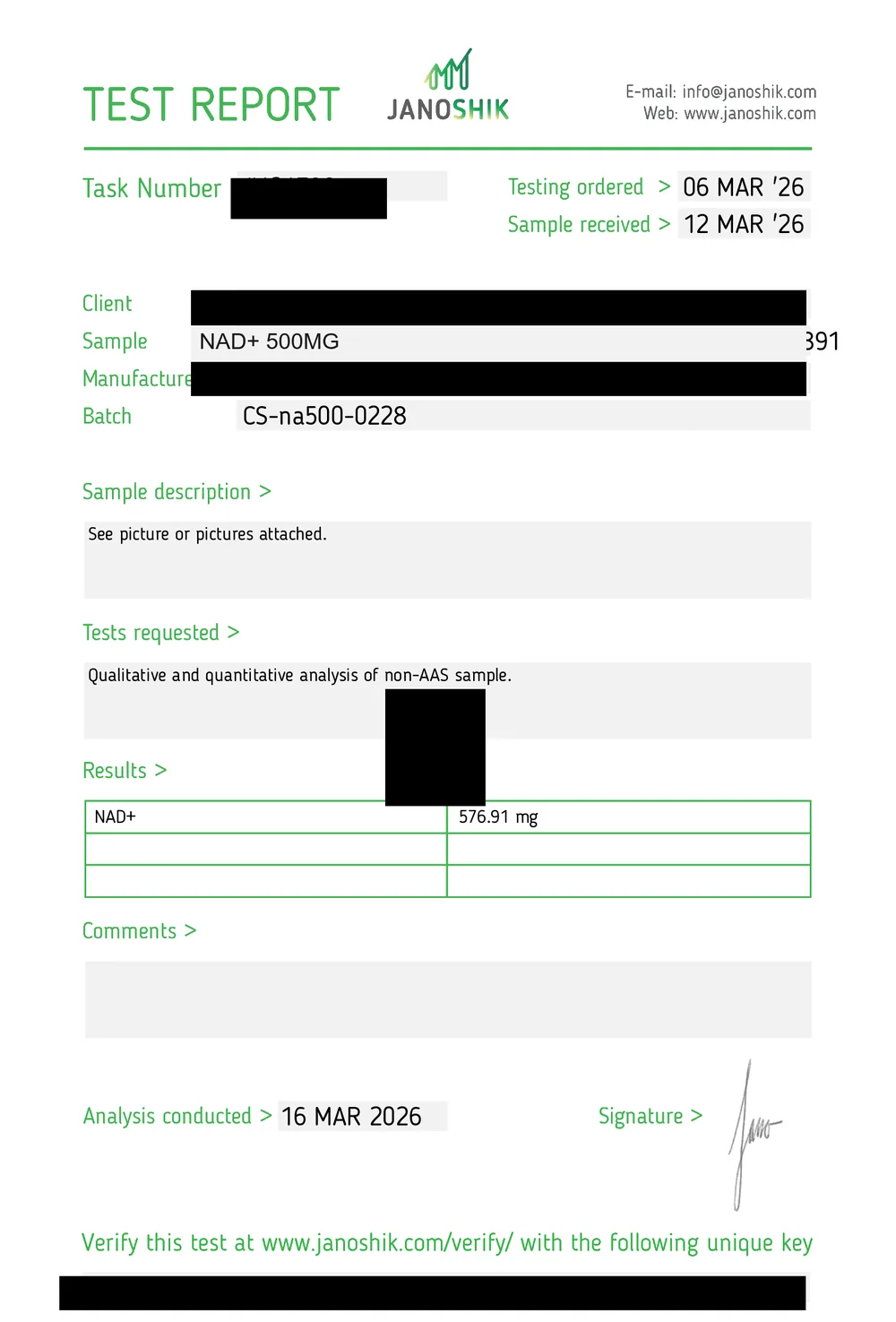
PT-141
99.864%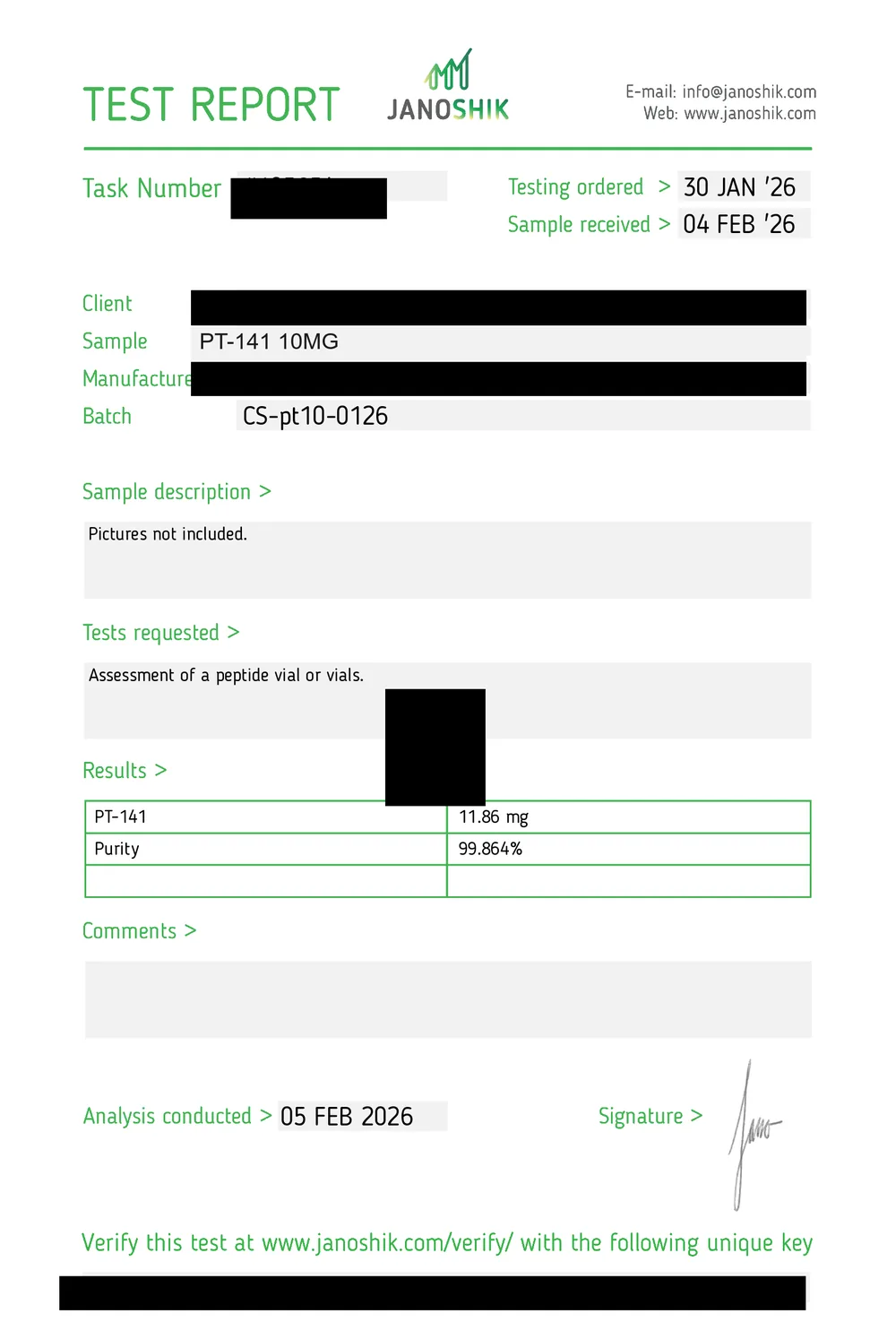
Retatrutide
99.762%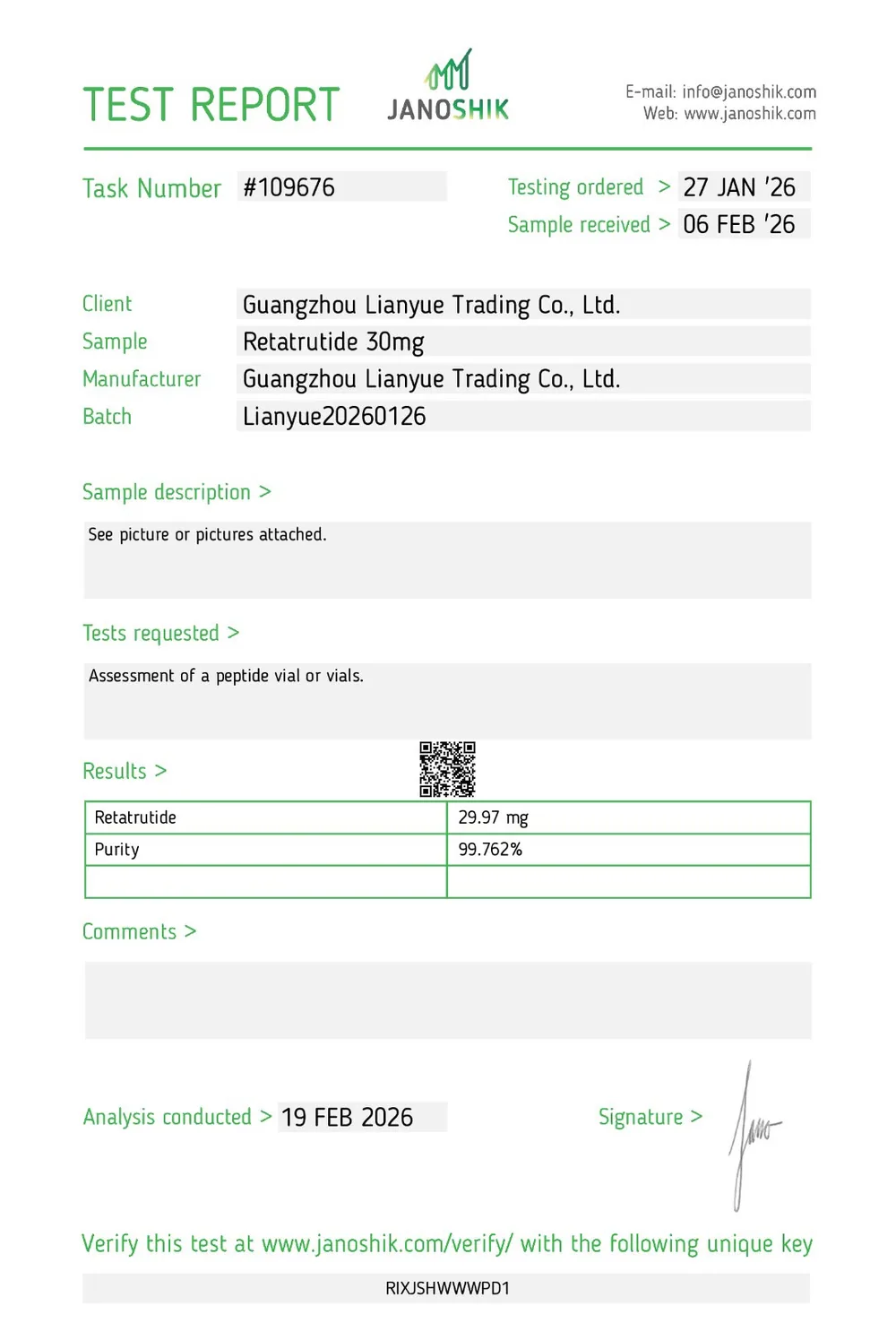
Selank
99.801%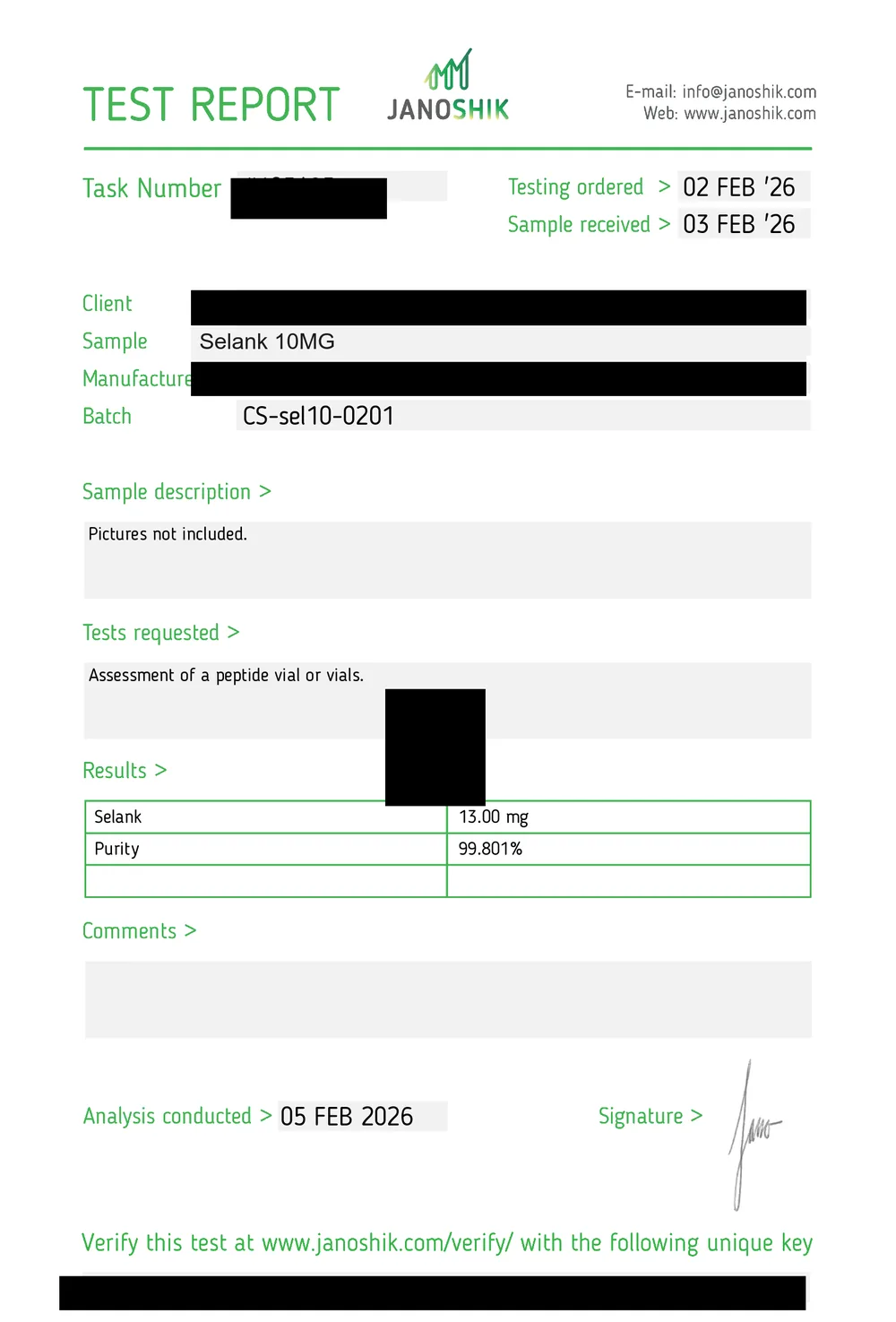
Selank
99.737%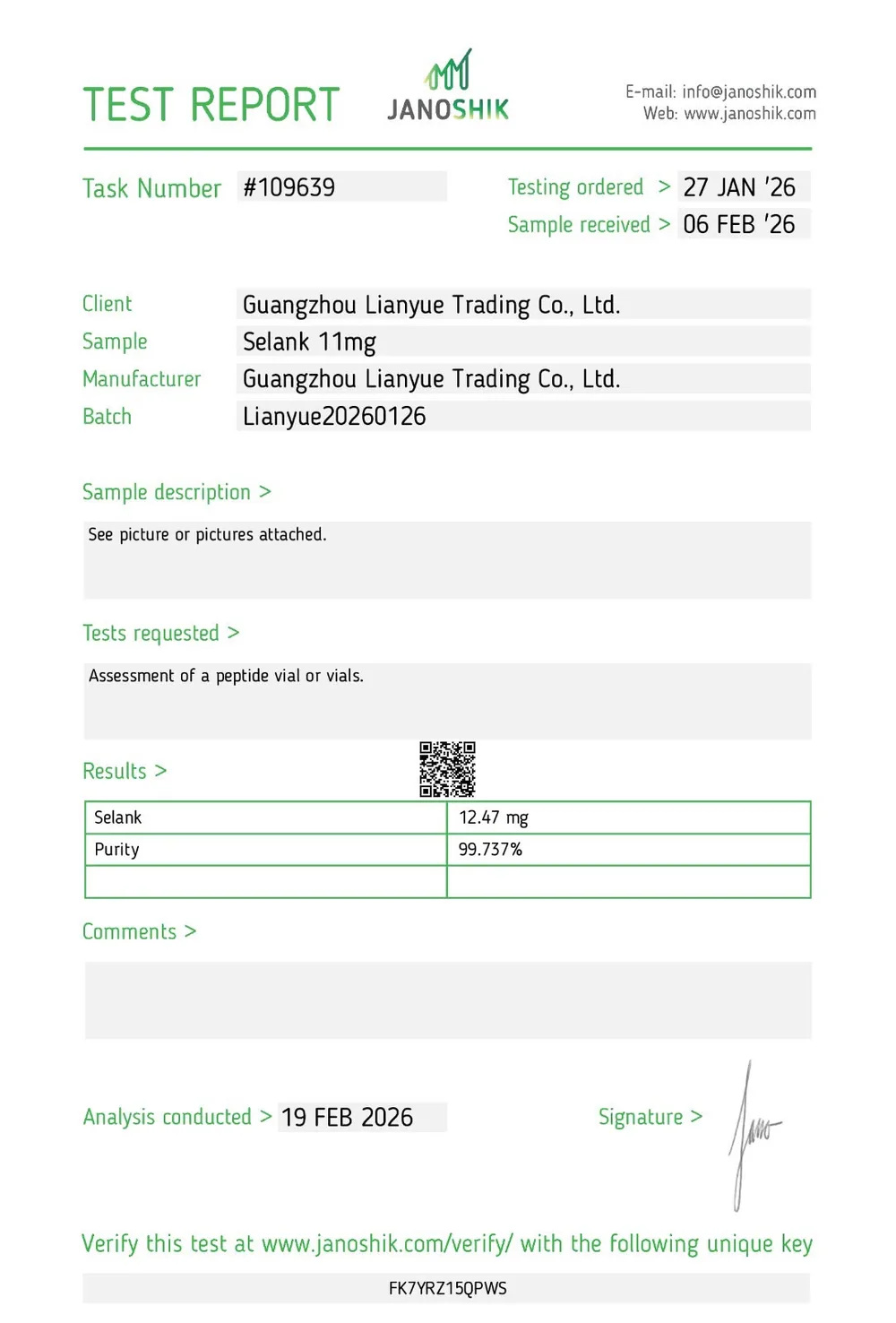
Semaglutide
99.471%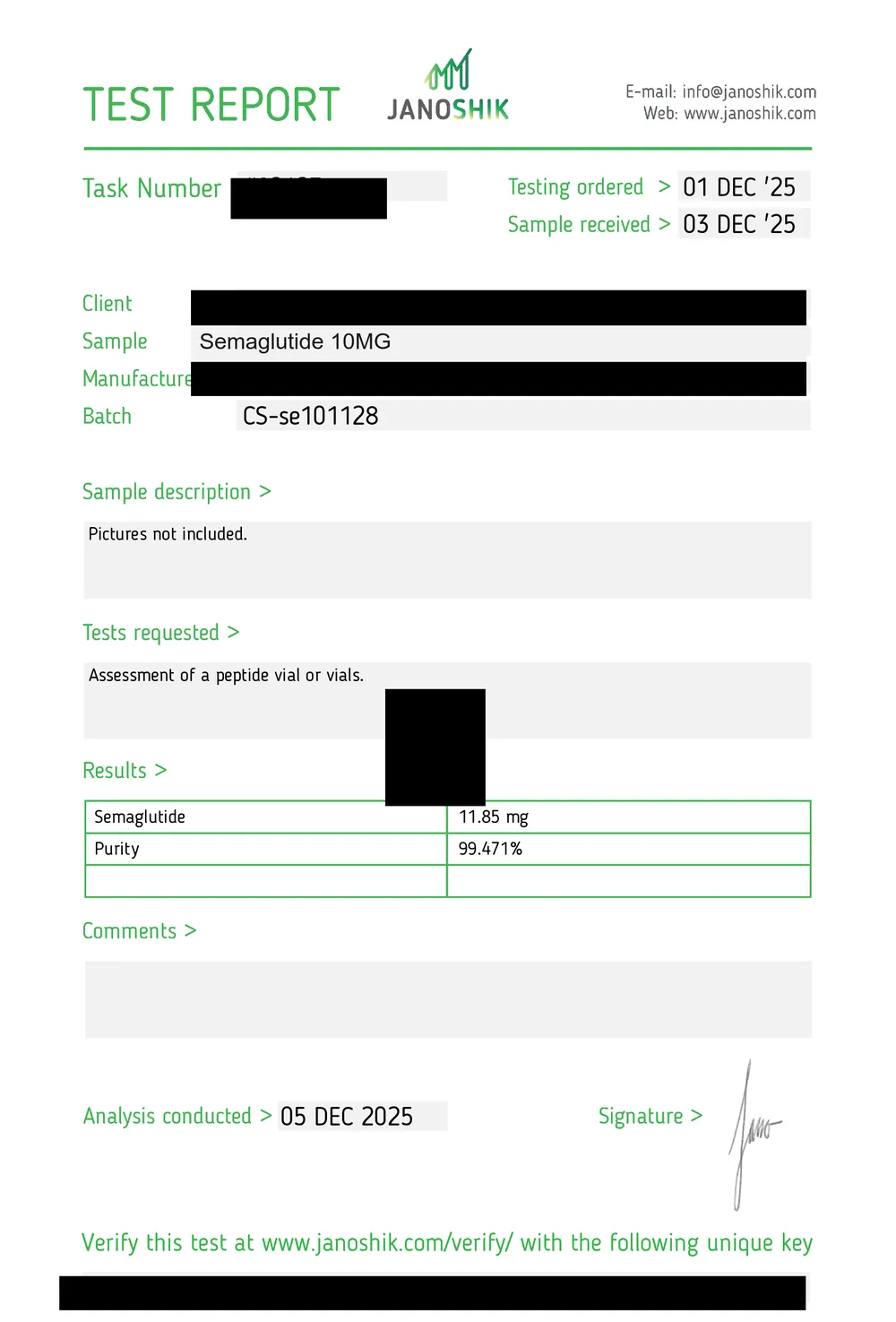
Semax
99.566%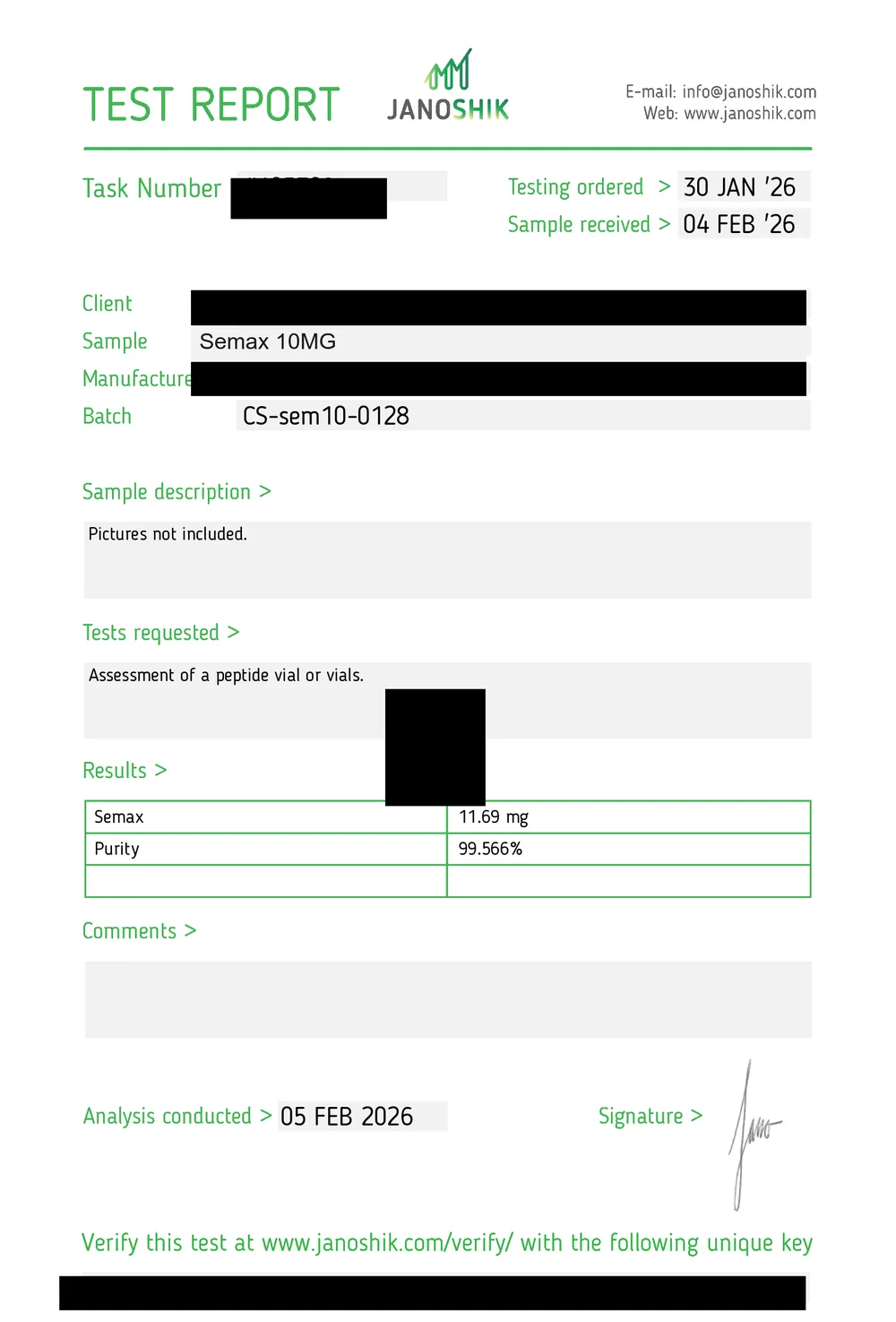
TB-500
99.807%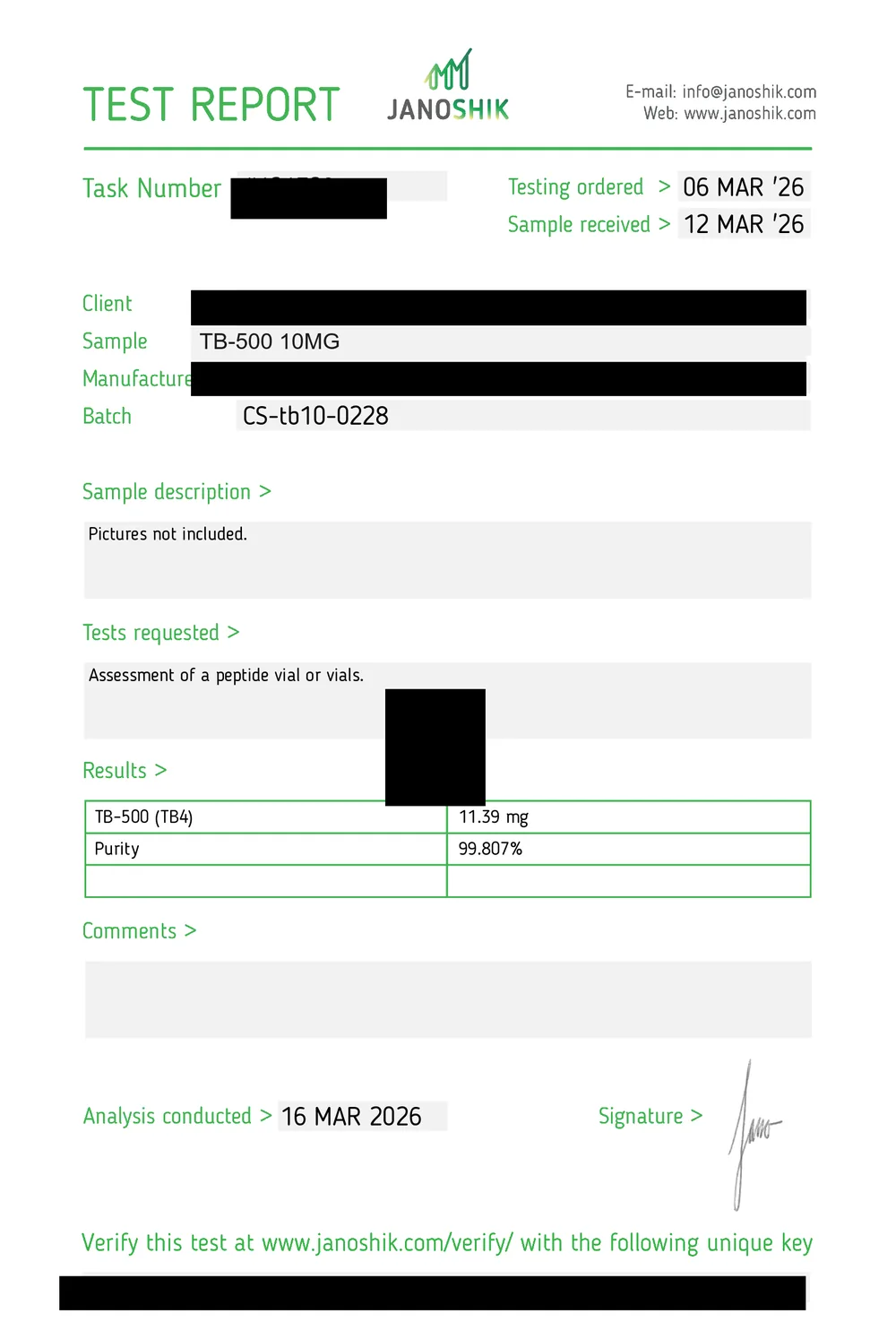
Tesamorelin
99.704%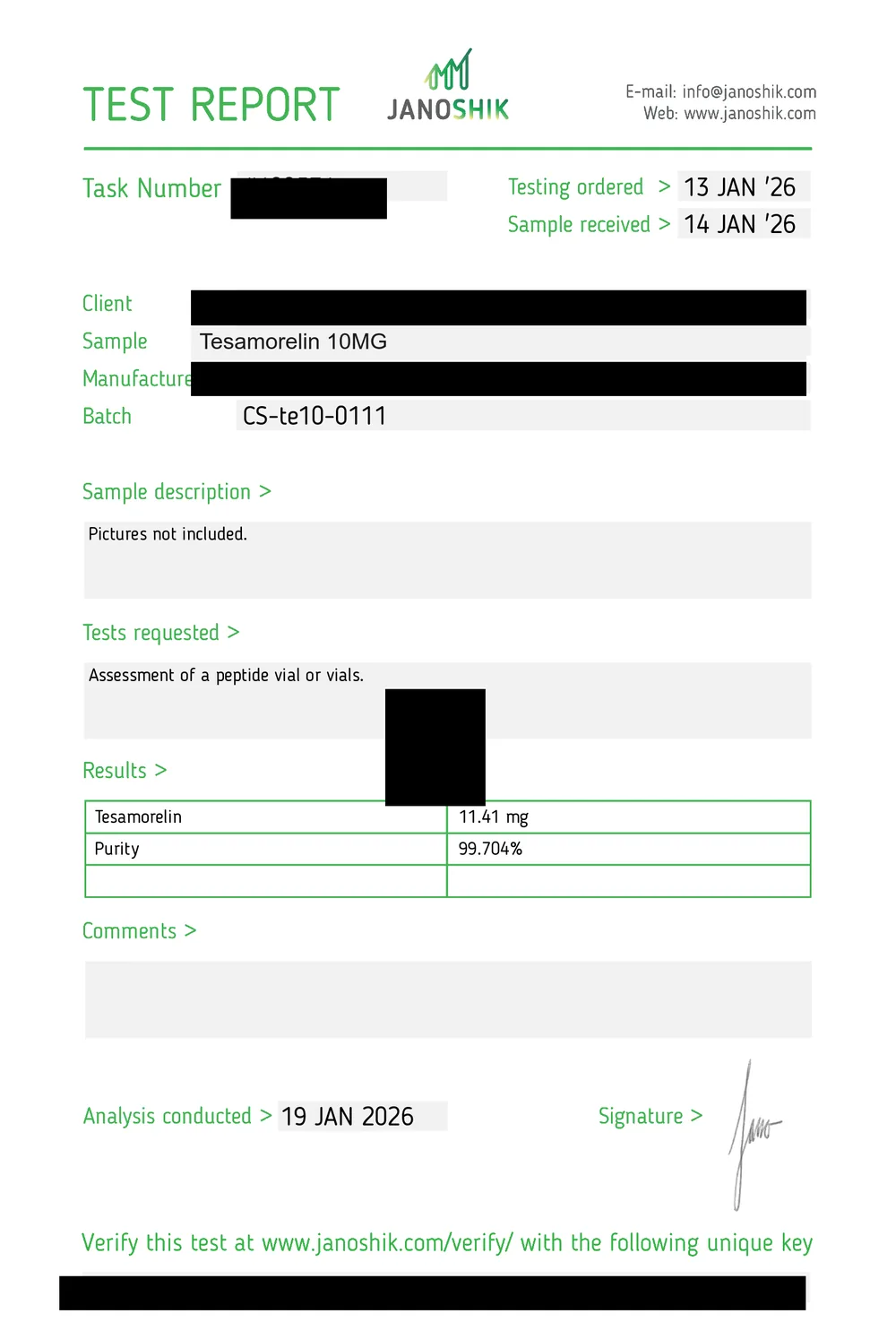
Thymosin Alpha-1
99.695%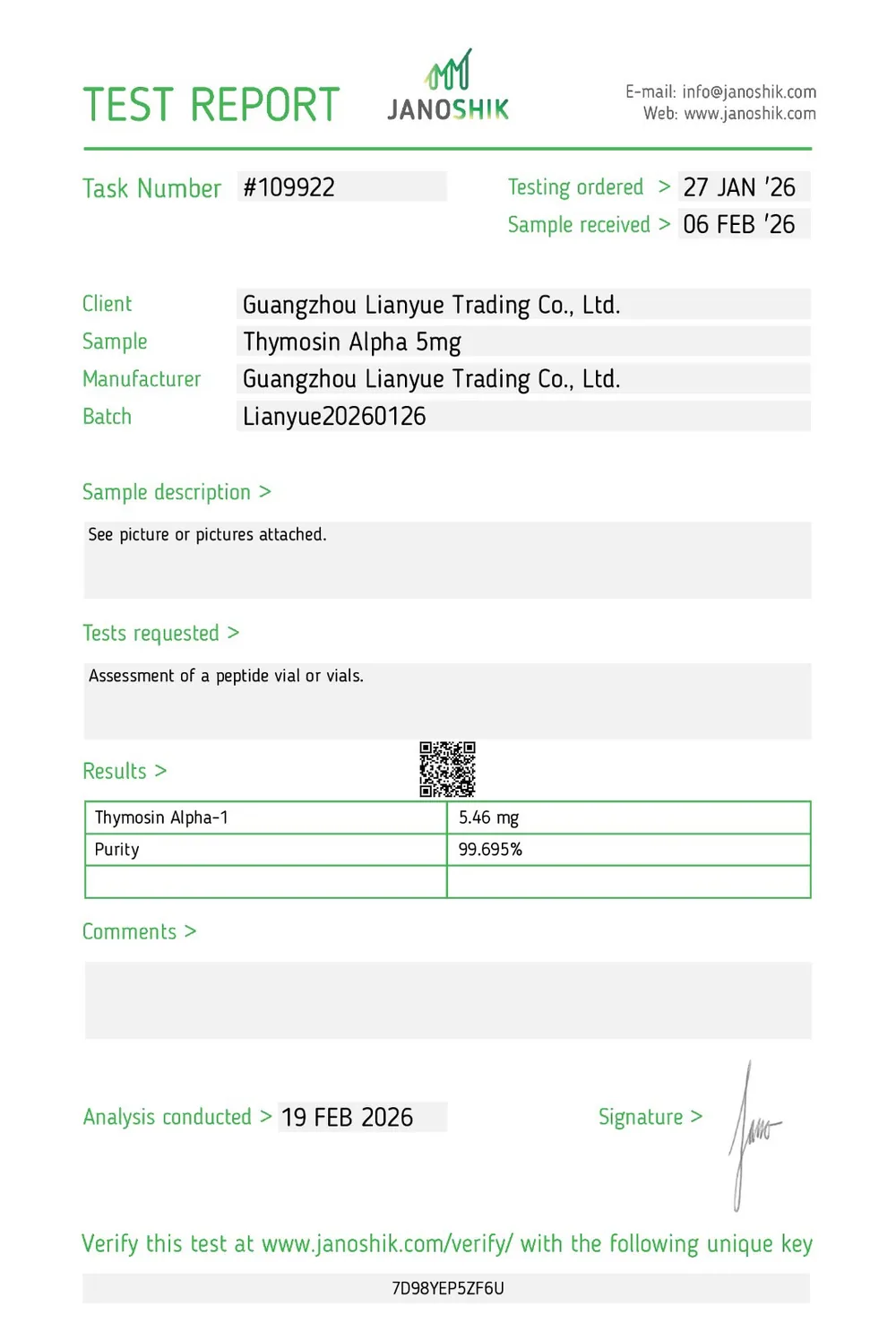
Why independent verification matters
A certificate hosted on a supplier's own website is, on its own, just an image. What makes a report meaningful is that you can check it against the issuing laboratory's records without taking the supplier's word for anything. Where we hold the task number and verification key, we publish them — enter them at janoshik.com/verify and confirm the figures independently. Where the supplier redacted them, we say so on the card instead of leaving you to assume otherwise.
We'd encourage applying the same standard to any research peptide supplier, including ones you compare us against: ask for the certificate covering the specific lot you'd receive, check that the analyte named on the report matches the compound you're ordering, and verify the report ID with the laboratory. Suppliers who can't produce a verifiable, batch-specific report are asking you to trust a number with nothing behind it.
Our full quality process — sourcing, QC pipeline, and storage handling — is documented on the quality & testing page, and our guide to reading a peptide CoA covers the analytical methods in more depth.
Certificate of Analysis — FAQ
What is a Certificate of Analysis for a research peptide?
An analytical report from a testing laboratory documenting what a specific batch actually contains — typically purity by reversed-phase HPLC and identity by mass spectrometry. It is batch-specific: it describes one lot, not the product in general.
Who tests TXLABS peptides?
Janoshik Analytical, an independent third-party laboratory widely used for research peptide analysis. We don't self-report purity figures.
How do I verify a Certificate of Analysis is genuine?
Reports marked Key published list their task number and verification key — enter those at janoshik.com/verify to check them against the laboratory's records. Reports marked ID redacted can't be verified from the image alone; request the unredacted copy and we'll obtain it. Verifying independently, rather than trusting a supplier-hosted image, is the correct practice for any research peptide purchase.
Why are some report IDs redacted?
On some certificates our supplier removes the task number and verification key, along with the client and manufacturer fields, before releasing a copy. The analytical results are unchanged, but a redacted report can't be independently checked from the image alone — so we label it rather than present it as verified.
Why do some reports show no purity percentage?
Where a vial contains two peptides — BPC-157 with TB-500, or CJC-1295 with ipamorelin — the laboratory quantifies each component separately and a single combined purity figure isn't meaningful. Those reports show assay masses only and are marked Assay only, as is NAD+, which is quantified by mass.
What does the assay value mean compared to the label weight?
Label weight is the vial's nominal content; assay is the mass of target peptide actually measured. At or slightly above label indicates a vial filled to specification. Purity and assay are separate measurements — purity describes composition, assay describes quantity.
Can I get a CoA for a compound not listed here?
Yes. This page publishes reports for current in-stock lots; for any other catalog number, email support@txlabs.bio. Because certificates are batch-specific, requesting the report for the lot you'll actually receive is always most accurate.
Are these products for human use?
No. All TXLABS products are sold strictly as research reference materials for laboratory use only. They are not drugs, supplements, or cosmetics, and are not intended for human or veterinary consumption, diagnosis, or treatment.
Browse the catalog